


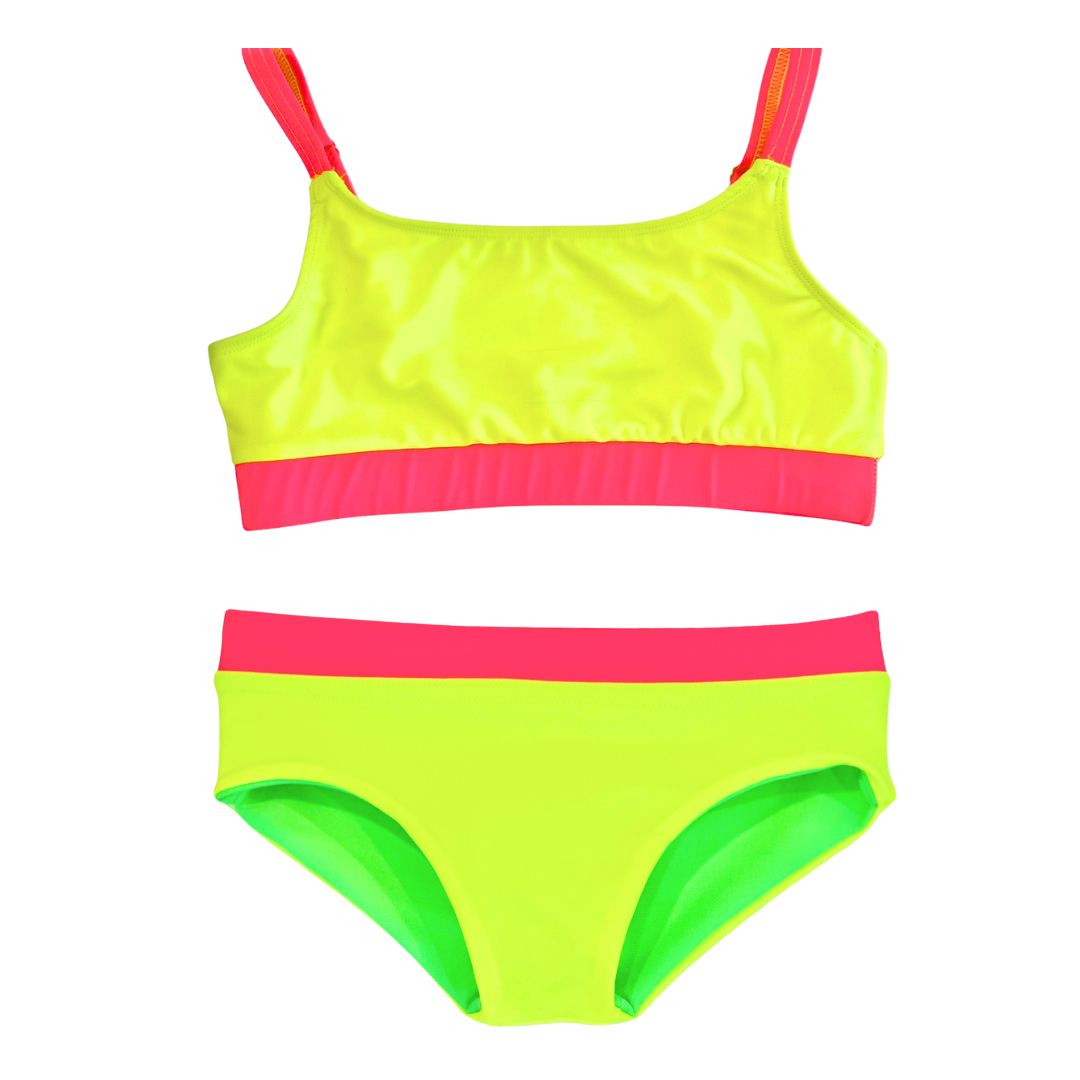


Keep Your Neon Swimwear Bright
Neon is bold for a reason. It stands out so that you can see your kids when it matters most. But that means when stains happen, they show more visibly. And when the fabric is neon, the wrong cleaning method can cause color loss. At HiViz Swimwear, we know you want high visibility and long-lasting wear.
Here's how to treat the most common stains in swimwear and keep your neon swim looking its brightest and best.
How to Get Sunscreen Stains Out of Neon Swimwear
Why Sunscreen Stains Swimwear
Sunscreens, especially mineral-based ones, leave behind oil and residue. These create a dull or patchy appearance on neon fabric and can discolor if left untreated.
To prevent sunscreen stains and discoloration, rinse your neon swimwear after each use and lay it flat or hang it to dry.
If you already have sunscreen stains on your neon swimwear:
-
Rinse the suit in warm water as soon as possible after swimming.
-
Apply a small amount of mild liquid detergent to the stain.
-
Let it sit for about 10 minutes in warm water.
-
Rinse thoroughly and proceed with a gentle full wash.
Avoid scrubbing unless it is necessary. Vigorous scrubbing can weaken the fibers and alter pigment structure, so if you do need to scrub the stain, we recommend doing so gently and WITH the grain of the fabric.
Nylon caveat:
Nylon traps oils more easily than polyester swimwear and fades faster from sunscreen contact. It also shows stains more quickly.
How to Get Food Stains Out of Neon Swimwear
Let’s be real, kids are messy! There is practically no chance they won’t be getting food on their neon swimwear. Here’s how to clean food stains out of neon swimwear:
-
Rinse the area with warm water.
-
Soak the swimsuit in a bowl of water with a teaspoon of mild detergent for 15 minutes.
-
Gently dab with a clean cloth. If more vigorous scrubbing is required, use a plastic scrub brush and scrub in one direction with the grain of the fabric.
-
Rinse and wash normally.
For oily foods like chocolate or ice cream, apply a drop of dish soap before soaking.
Body Oils and Sweat
Body oils mix with sunblock, chlorine, or salt and can cause discoloration on your kids’ neon swimwear. We see this in my house most commonly around the collar.
How to get sweat stains out of neon swimwear:
-
Saturate the neon swimwear with warm water.
-
Spot treat the discolored portion of the neon swimwear with mild detergent; we often also treat it with dish soap.
-
Soak in warm water for 10 minutes.
-
Rinse and follow with a regular cold wash.
-
Lay flat to dry.
How to Get Mildew Stains Out of Neon Swimwear
Despite our best efforts, we have all forgotten to empty the beach bag with the wet swimsuits in it. Depending on how long it’s been, it might mean that your neon swimwear has a musty smell or spots of mildew. Mildew is more likely to appear in areas where food and saliva have touched, like cuffs and collars.
How to get mildew out of swimwear:
Soak the suit in a solution of 1 part white vinegar to 4 parts warm water for 30 minutes.
-
Rinse thoroughly.
-
For mildew spots, you can use a plastic bristle brush like a tooth brush or scrub brush to gently scrub the fabric WITH the grain. We hate to say it, but this may take a little bit of time and a lot of scrubbing!
-
Wash with cold water.
-
Lay flat to air dry.
How to Get Grease Stains Out of Neon Swimwear
Aside from body oils, sunblocks, and foods, sometimes our kids get straight-up grease stains on their neon swimwear from who knows what! Cleaning grease stains from swimwear is similar to cleaning body oil, sunblocks, and fatty foods.
-
Saturate the area with warm water.
-
Apply dish soap to the grease stain and let it sit for 5 minutes.
-
Gently scrub in one direction with a plastic scrub brush-scrub with the grain of the fabric.
-
Rinse and wash normally.
-
Lay flat to dry.
How to Get Ink Stains Out of Neon Swimwear
Our kids' neon rash guards are worn all the time, even for non-water-related activities. This means that sometimes my kids are in them when they are doing things like coloring and writing. This means we’re often getting ink on them! Getting ink stains out of fabrics can be tricky. This tip is one my grandmother taught me and one I’ve used many times on my kids’ neon swimwear! [and the 1,000 other things they've gotten ink on!]
-
Saturate the area with warm water.
-
Apply dish soap to the ink stain and let it sit for 5-10 minutes.
-
Saturate the ink stain with rubbing alcohol.
-
Rub the fabric together between your fingers for 30-60 seconds, and then, while holding it under warm water, continue to rub. The stain should wash out. If not, gently scrub in one direction with a plastic scrub brush-scrub with the grain of the fabric.
-
Rinse and wash normally.
-
Lay flat to dry.
A tried and true tip for cleaning stains out of swimwear.
At HiViz Swimwear, we chose polyester neon fabric for one major reason: it performs better. Especially when it comes to color retention, durability, and stain resistance. If you’ve ever owned a neon suit that faded or turned patchy, you’ve likely experienced the downside of neon nylon. Polyester neon swimwear is hydrophobic, meaning it repels water. It also means that stains generally stay on the SURFACE of the fibers and do not penetrate them.
From many stains and much trial and error, we have found that a short soak in warm water, or saturating a stained area in warm water, tends to work better than the generally recommended ‘cold water’ for stain treatment. This is because it gently loosens the fibers and which enables better, easier stain removal! Please avoid long soaks and the use of hot water.
Always finish any treatment with a full rinse and a cold wash. Never use bleach, hot water, or harsh cleaners.
A note about nylon swimwear stain removal:
Nylon neon swimwear is much more prone to discoloration and color loss from treating stains. Nylon swimwear does not have the same durable dyeing process as polyester swimwear does. Nylon neon swimwear will lose color with every wear, and with detergents and scrubbing. Warm and hot water will cause color to leech out of nylon swimwear more rapidly.