

A New Study Is Raising Important Questions For Parents
A recent university-led study found that some children’s fast-fashion clothing contained lead levels exceeding U.S. safety limits, with brightly colored garments such as red and yellow showing the highest release during testing. Researchers also noted that simulated digestion, such as a child chewing fabric, could expose children to potentially harmful levels.
This matters because, according to the CDC, there is no safe level of lead exposure in children, and even low levels have been associated with cognitive and developmental effects.
Naturally, this raises an important question for parents: does this concern apply to swimwear, especially when it’s worn wet and directly against the skin?
The answer is nuanced, and understanding that nuance is where safe choices become clearer.
Does Your Child's Swimwear Bleed Dye?


Above are two images showing a before-and-after dye comparison following a water soak test. In the glass on the left is a sample of non-certified children’s neon swimwear. On the right is our neon pink HiViz rash guard.
At the end of the soak, the difference is clear. The HiViz swimwear maintained its color with no visible dye release, while the comparison sample showed significant dye bleeding into the water.
This type of result is often an indicator of how well a dye is bonded to the fabric. When materials are not properly processed or tested, dyes can be less stable under real-world conditions like water, heat, and wear. That’s one of the reasons we prioritize OEKO-TEX® STANDARD 100 certified fabrics, which are tested for both harmful substances and colorfastness.
The Quick Answer
✘ Bright colors themselves are not the problem
✔ The real issue is:
-
Material quality
-
Dye chemistry
-
Manufacturing process
-
Whether the product has been properly tested
High-quality, (OEKO-TEX®) tested swimwear, like our kids’ neon swimsuits, behaves very differently than low-cost, fast-fashion garments.
Why Swimwear Deserves More Scrutiny Than Everyday Clothing
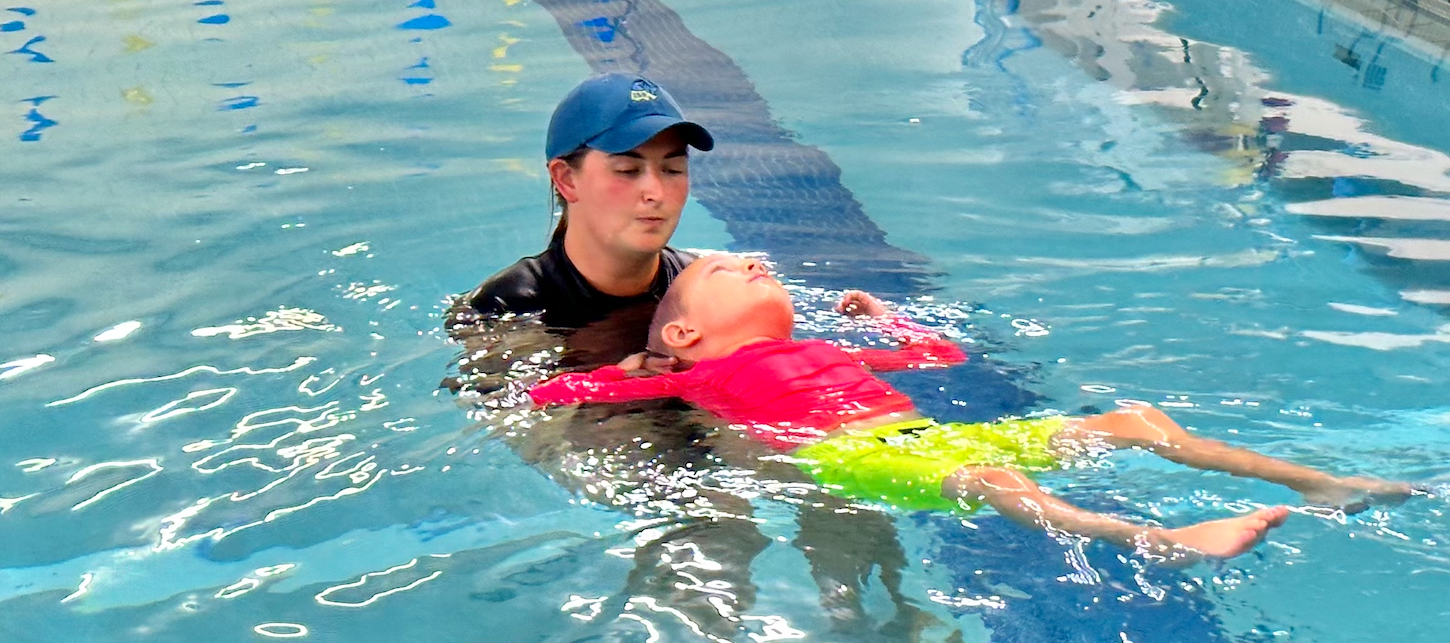
Kids’ neon swimwear is worn under conditions that increase the importance of fabric integrity. It is wet, often for extended periods, and sits directly against the skin while being exposed to heat, UV rays, chlorine, saltwater, and repeated wear. Additionally, with the trend toward more full-coverage for sun protection, more of the skin is covered with wet swimwear.
These factors can influence how a fabric performs over time. So can the quality of the fabric and dyeing process. When dyes are unstable or poorly fixed, the combination of moisture, heat, and friction can increase the likelihood of dye release, also referred to as leaching.
This does not mean all swimwear poses a risk. It means the margin for error is lower, and quality matters more when you’re evaluating the need for chemical-free kids’ neon swimwear.
Last year we shared a comparison of one of our kids’ neon rash guards, neon pink and neon yellow, soaking in water compared to another brand’s neon swimwear. The other brand leeched excessive amounts of dye - HiViz’s kids’ neon rash guard leeched none.
Which one do you want sitting against your child’s skin all day?
Water Exposure And Dye Leaching: What Parents Should Understand
Water plays a dual role in textiles:
✔ It can dilute substances
✘ It can increase release if dyes are unstable
In swimwear, this matters because fabrics are repeatedly:
-
Soaked
-
Heated
-
Stretched
-
Exposed to environmental stress
If a garment is made with low-quality materials, dyes or rushed processes, this can lead to:
-
Dye bleeding
-
Fading
-
Residue transfer
-
Increased exposure potential
We break this down further in our guide on how swimwear fabrics behave over time, including why some materials trap particles or appear discolored after beach use.
Not All Fabrics Hold Dye The Same Way
Fabric type plays a substantial role, but it is only part of the equation.
Polyester, when properly manufactured, is typically dyed under high heat and pressure. This allows dye to embed into the fiber, resulting in strong color retention and stability in water and repeated wear. This matters significantly when your primary reason for purchasing kids’ neon swimwear is for the brightness of the neon-you don’t want that fading.
Nylon, widely used in swimwear and especially in value brands, can perform very well when properly processed, but is more dependent on dye type and finishing. When corners are cut, it is more sensitive to inconsistencies and can show more variability in colorfastness. Additionally, when compared to polyester swimwear, polyester swimwear always outperforms.
The key takeaway is simple:
✘ It’s not just the fabric
✔ It’s how the fabric is made-the quality
So, Is Bright Swimwear Dangerous?
No — and this is where clarity matters!
✘ Bright color does not equal unsafe
✔ Poor-quality materials and dyes increase risk, lack of certification increases risk further
The issue raised in the study is not brightness itself. It is the use of lower-quality dyes, inadequate processing, and lack of testing.
Fortunately, when you buy your kids’ neon swimwear from HiViz, you can rest assured that not only will they be the brightest kids on the beach, that brightness will stick around all season long, and you don’t have to worry about chemicals leeching into your child’s skin because HiViz uses certified fabric and several, and soon all, our products will have OEKO-TEX® Standard 100 certification.
Where Risk Actually Increases
Higher concern is typically associated with:
-
Ultra low-cost fast fashion
-
Rapid production timelines
-
Minimal quality control
-
Lack of third-party certification
This can increase the likelihood of:
-
Heavy metal contamination
-
Poor dye fixation
-
Residual chemicals
Safer materials, better dye systems, and proper testing all require greater investment.
Why Certifications Like OEKO-TEX® Matter

This is where testing replaces assumptions.
OEKO-TEX STANDARD 100 evaluates textiles and all components for over 300 harmful substances, including heavy metals like lead, formaldehyde, pesticides, and restricted chemicals. It also evaluates extractable substances, meaning what could transfer to skin, and includes requirements for colorfastness.
For swimwear, this is especially important because:
-
It is worn wet
-
It is worn for long periods
-
It sits directly against skin
In these conditions, what can transfer matters more than what simply exists in trace amounts.
Why HiViz Takes This Approach
When we started HiViz Swimwear, we had a choice: cheap or quality? We didn’t build HiViz to be the cheapest option. We built it around one vitally important question:
Would we feel completely comfortable putting this on our own children?
As moms, we think about:
-
What touches their skin
-
How long they wear it
-
What happens when it gets wet
-
How it holds up over time
-
How we can better protect them
That’s why we:
✔ Use high-quality materials designed for durability and stability
✔ Prioritize OEKO-TEX® STANDARD 100 certified fabrics
✔ Focus on real-world performance, not just appearance
✔ Have OEKO-TEX® STANDARD 100 certified products (and soon all of them will be!)
If you’re looking for neon swimsuits for kids designed with both visibility and material integrity in mind, you can explore our collection here:
👉 https://hivizswim.com/collections/all
The Real Takeaway For Parents
This study is not about avoiding bright clothing. It is about understanding what matters.
✘ It’s not the bright colors that pose the risk
✔ It’s the quality, process, and testing
FAQ
Is bright swimwear safe for kids?
Yes, when it is made with high-quality materials and tested. The color itself is not the risk.
Can swimwear release chemicals when wet?
If dyes are unstable, water and heat can increase release. This is why testing for colorfastness and extractable substances is important. All HiViz Swimwear has excellent colorfastness and is OEKO-TEX® STANDARD 100 certified or made with certified fabric.
Is OEKO-TEX® the same as chemical-free?
No. It means the product has been tested for harmful substances and meets strict limits. [insert document link here]
What fabrics are best for swimwear?
Both polyester and nylon can be safe when properly manufactured. The key is quality and testing. In our personal testing experience, kids’ neon swimsuits made from polyester leech color much more than HiViz kids’ neon swimsuits.
Why does higher-quality swimwear cost more?
Neon swimwear for kids varies in price range. But you pay for what you get. Higher-quality kids’ neon swimwear is made from better materials, uses safer processing, and carries verified testing. Better quality materials and processes cost more, as does certification.
Final Thoughts From Mary & Brittany
Swimwear is often worn in conditions that amplify the importance of material quality. Wet, warm, and against the skin for hours at a time is not the same as casual clothing.
As parents and founders, we believe children’s swimwear should be designed with those realities in mind. That means prioritizing visibility, durability, and materials that have been responsibly tested.
When we say swimwear should be about safety first, we mean it.
Safety through visibility
Safety through UPF 50+ sun protection
Safety through certified testing
Insanely bright, the highest sun protection, and free of harmful substances that can harm our most precious people.
With love, truly,
Mary & Brittany