



Common Questions About Neon Swimwear
What makes neon swimwear different from other bright swimwear?
True neon colors fluoresce — they absorb invisible ultraviolet (UV) light and re-emit it as visible light, creating a glow that other bright colors can't match. Standard bright colors only reflect visible light, which means they fade quickly once submerged. Neon stays visible above the surface, below it, and even in low-light conditions.
Does neon swimwear actually stay visible underwater?
Yes. Most colors disappear underwater quickly because water absorbs different wavelengths of light — red goes first, then orange, yellow, green, and blue. Neon colors are different because they fluoresce. They absorb UV light, which penetrates deeper in water than visible light, and re-emit it as a visible glow. This is why neon swimwear remains visible at depths where other colors have already faded.
What is the most visible swimsuit color in water?
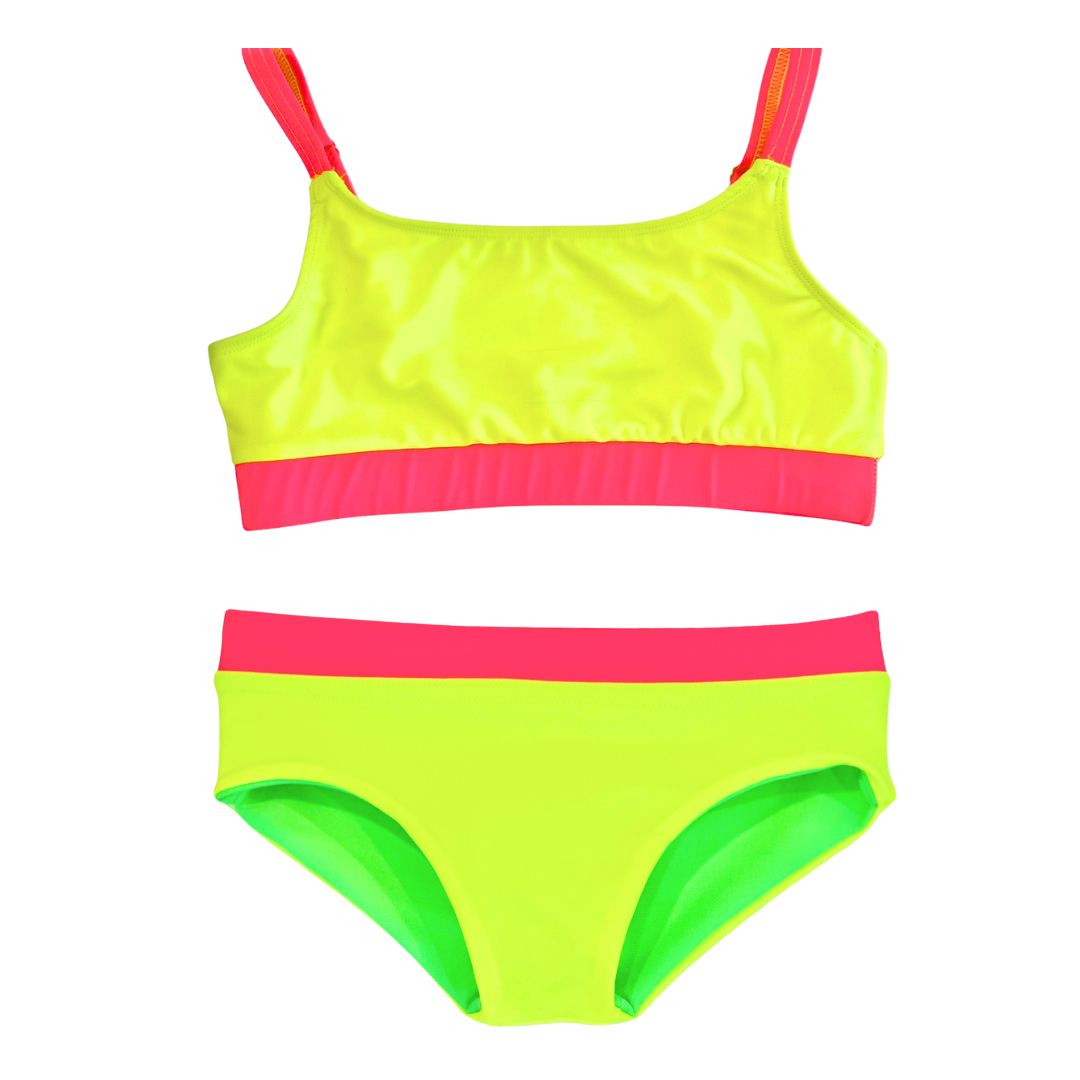
Neon yellow, neon orange, and neon green consistently rank as the highest-visibility swimsuit colors in real water conditions — both above and below the surface. Their fluorescent properties give them an advantage over every other color including other bright shades. Blue, white, and pastels are among the hardest colors to see in water.
Does neon swimwear help with water safety?
Yes — high-visibility neon swimwear is one of several important layers of drowning prevention. It helps parents and supervisors spot children more quickly in and around water, making active supervision more effective. It doesn't replace supervision, swim lessons, pool fencing, or CPR knowledge — but it meaningfully supports all of those safety measures.
Does neon swimwear provide better sun protection?
Bright and neon fabrics reflect more UV radiation than light or pastel shades. When combined with UPF 50+ rated fabric — which blocks 98% of the sun's harmful UVA and UVB rays — neon swimwear offers superior sun protection. The fluorescent dyes in neon fabrics also absorb UV light and re-emit it as visible light, further reducing the amount that reaches your child's skin.
Is neon swimwear good for low-light conditions?
Yes — this is one of neon's biggest advantages over other bright colors. Because neon fluoresces using UV light, which is present even on cloudy days and at dusk, neon swimwear continues to glow in conditions where other bright colors look dull. This makes neon especially valuable during those golden hour swims when natural light starts to fade.
Why do parents wear neon swimwear too?
When parents wear neon swimwear, they become easier for their kids to spot in crowded environments like beaches, water parks, and pools. Kids can get disoriented quickly in busy places — seeing a neon-clad parent instantly helps them reorient and reduces that moment of panic when they can't find mom or dad.
What is UPF 50+ and why does it matter for kids?
UPF (Ultraviolet Protection Factor) measures how much UV radiation a fabric blocks. UPF 50+ is the highest achievable rating, meaning the fabric blocks 98% of UV rays. This is especially important for infants, toddlers, and children whose skin is more sensitive to UV damage and long-term sun exposure. Wearing UPF 50+ swimwear means less sunscreen reapplication and more time in the water.