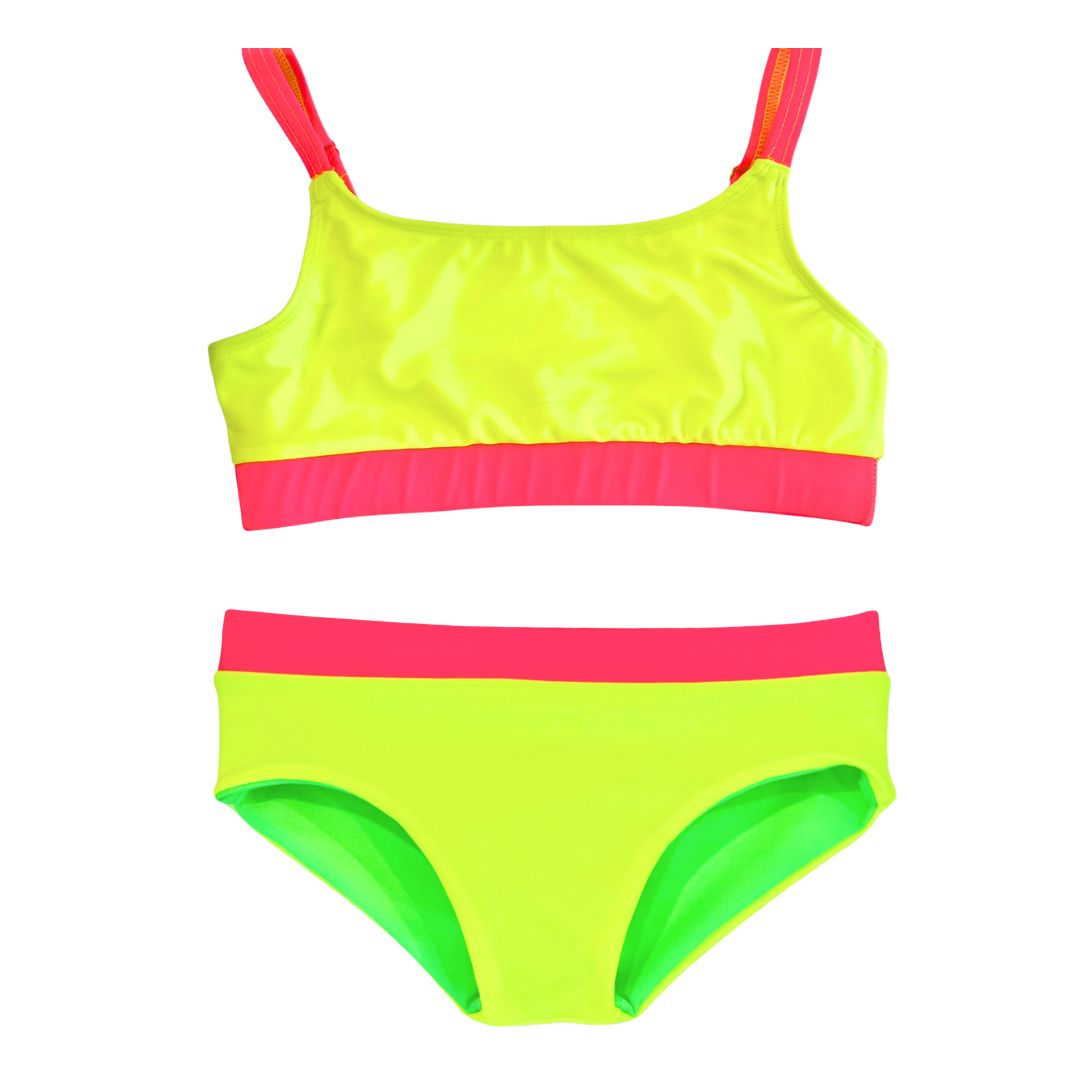


Little black dots on a bathing suit after the beach can be tiny grains of sand trapped in the fabric, rather than mold or mildew. Gritty particles that loosen when rinsed are a clue that you're dealing with sand. Fuzzy or blotchy spots, a musty smell, or spots that spread over time call for a closer look. Appearance alone doesn't confirm the cause, and sand that won't rinse away isn't automatically mold.
You finally unpack the beach bag after a long day outside and start pulling everything out: towels, goggles, sunscreen, snacks, and swimsuits.
Then you notice something strange.
Tiny black specks all over the swimsuit.
Your first thought might be:
“Is this mildew?” or “Did mold grow on the swimsuit already?”
This is a common concern parents search for online, especially when they see dark dots on bright swimwear.
After a beach day, one possible explanation is tiny grains of sand or particles from the ocean or lake caught between the fibers. Here's how to look more closely and what worked in our sand-removal testing.


Why Sand Gets Stuck in Swimsuits
Swimwear is made from stretchy synthetic fabrics like polyester, nylon, and spandex, so it can move comfortably with kids while they swim and play.
These fabrics are designed to be:
- stretchy
- durable
- quick drying
- comfortable in water
But the stretchy knit structure of swimwear can also allow very small particles to get caught between the fibers of the fabric.
At the beach, some sand is extremely fine. When swimsuits get wet, those tiny grains easily cling to the fabric and work their way into the weave.
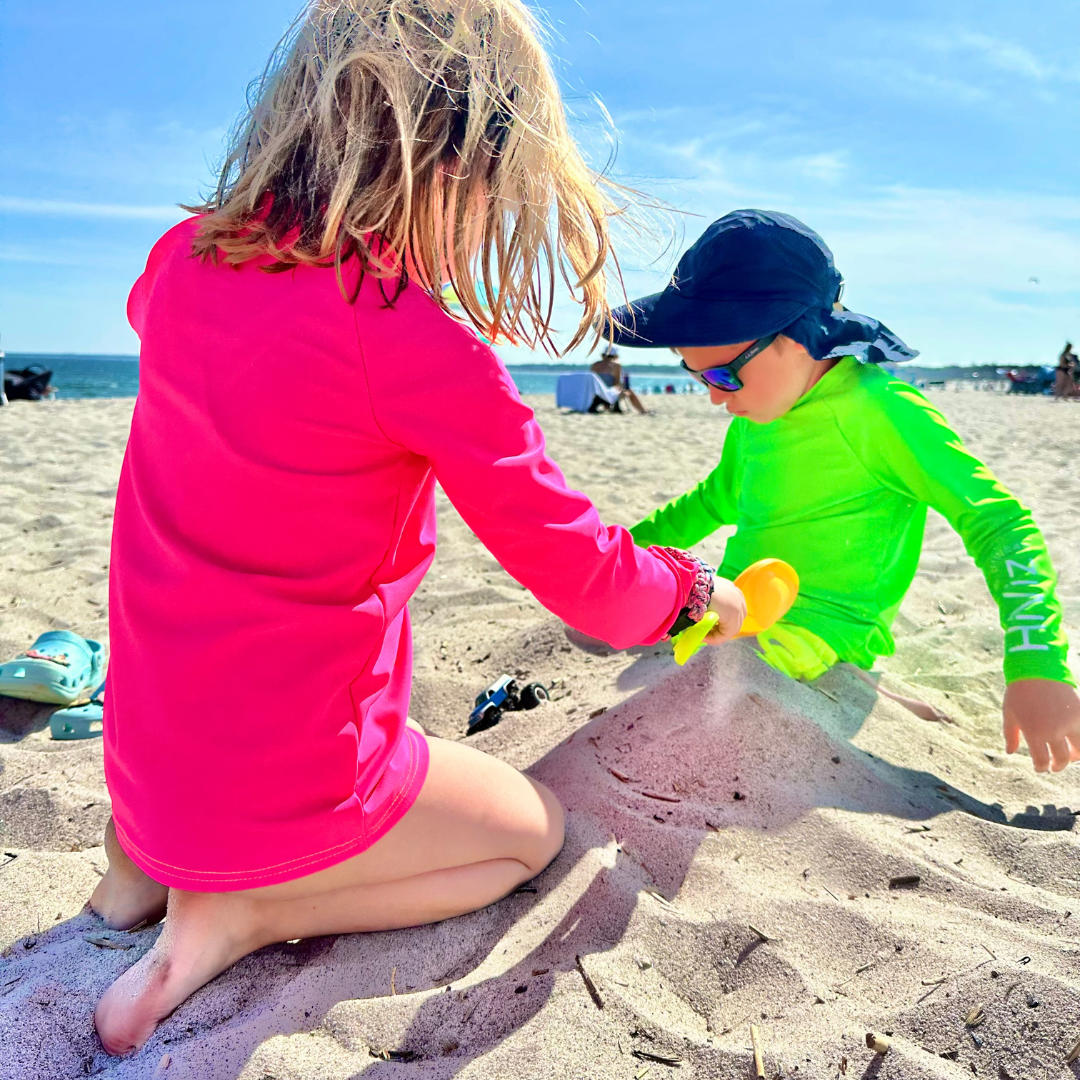
Kids also tend to spend a lot of time sitting, kneeling, and playing in the sand, which increases the chance of particles getting trapped in swimwear.
Common ways sand gets into swimsuits include:
-
- sitting directly on the beach
- playing in the sand near the water
- rolling in the sand after swimming
- wrapping swimsuits in sandy towels
- placing wet swimsuits in beach bags
- swimming in water stirred up by recent storms
Once sand gets into the fabric, it can look like tiny dark specks scattered across the swimsuit.
Why Black Specks Are More Visible on Neon Swimwear
If you notice this happening on your kids' neon swimsuits, especially neon yellow, you’re not imagining it.
Lighter colors make dark particles much easier to see.
For example:
-
- dark swimsuits hide sand particles easily
- patterned swimsuits also hide particles easily
- bright neon swimsuit colors make small grains stand out
This means the exact same amount of sand may be present on different swimsuits, but it’s simply more visible on lighter or neon fabrics.
It’s similar to how crumbs are easier to see on a white countertop than on a dark one.
Why the Specks Show Up After the Beach Bag
Parents often notice black specks after unpacking the beach bag, which can make it seem like something grew on the swimsuit.
When wet neon swimwear gets packed in a beach bag, it may be:
-
- pressed against sandy towels
- packed tightly with other items
- rolled or folded while damp
This pressure can cause sand particles to settle deeper into the fabric weave, making them more visible when the swimsuit is unfolded later. And if we're being totally honest, how much are we really paying attention to sand in the swimsuit while we are in the chaos that is picking up and leaving the beach?
Is It Mildew or Is It Sand on a Swimsuit?
If you see black spots on your kids' neon swimsuits, it’s natural to wonder whether it’s mildew or mold. Here are some clues to help you decide what to look into next.
Signs It May Be Sand
Sand trapped in kids' neon swimwear may:
-
- look like tiny dots or grains
- feel slightly gritty
- brush off if the grains are loose
- rinse away with water, although particles caught deeper in the fabric can be stubborn
Sand is also more likely to appear in areas that touch the beach, such as:
-
- the bottom of your neon rash guards
- the seat of your neon swimsuit
- sleeves or edges of your neon swimwear
Signs It Might Be Mildew or Mold
Mildew behaves differently from loose sand. Signs that warrant a closer look include:
-
- fuzzy or blotchy spots
- a musty smell
- spots that appear to be on the fibers rather than individual grains between them
- spots or growth that spread over time
Mildew can develop when a swimsuit stays damp for long periods without airflow, such as when it’s left wet in a bag or laundry basket. Spots that do not rinse away can also be trapped sand or staining, so that clue alone doesn't tell you whether they're mold.
What if the Spots Really Are Mold or Mildew?
If you arrived here searching for how to get mold out of a swimsuit or bathing suit, keep in mind that the sand-removal method below is not a tested mold treatment.
For mildew-stain care instructions for our neon swimwear, see our swimwear stain-removal guide. Check your garment’s care label before trying a cleaning treatment, especially on other fabrics.
If spots or a musty smell remain after cleaning, contact the manufacturer rather than repeating harsher treatments. Removing visible stains doesn't establish that mold has been eliminated.
How to Remove Sand From a Swimsuit
If the specks are sand, there are multiple ways you can attempt to remove them. These are the methods we personally tested. Our results apply to trapped sand, not mold or mildew.
-
- ❌ Using a hairdryer: not effective in our testing
- ❌ Using the air compressor: not effective in our testing
- ❌ Spraying with the hose: not effective in our testing
- ❌ Lint roller: not effective in our testing
- ❌ Normal washing: not our most effective option for stubborn trapped sand
- ❌ Shaking and stretching: helped some, but was awkward and time-consuming
- ✅ A short soak with gentle manual agitation: our most effective method
Shake and Stretch the Fabric
Sometimes stretching the fabric slightly helps release trapped particles. We tested this one out and although it does work, it's awkward, works better with two people, takes too much time and is irritating.
If you want to try this one you can:
-
- shake the swimsuit outside
- gently stretch the material without pulling hard
- tap the fabric to release sand
Try a Normal Wash
Loose sand may come out during normal laundering, but washing alone wasn't our most effective method for stubborn particles.
Soak It and Gently Agitate It
If the sand in your kids' neon swimsuit is stubborn, we found the easiest and most effective method of removing it was a short soak and some gentle manual agitation.
-
- For the swimwear we tested, we filled a bowl or sink with warm water, not hot.
- Let the swimsuit soak for 15 minutes.
- Gently move the swimsuit around in the water with your hand.
We found this worked extremely well on the swimwear we tested: as we gently agitated the fabric, particles fell to the bottom. The more sand we tried to get out, the longer it took. This was the most effective method we tried, but results can vary with the fabric and how deeply the sand is trapped.
If you don't mind some remaining sand, continue your normal swimwear-care routine. In our experience, some trapped particles loosen over time as the swimwear is worn and washed.
How to Prevent Sand From Getting Stuck in Swimwear
Sand is part of every beach day, but a few small habits can help reduce how much ends up trapped in swimsuits.
After swimming:
✔ shake out sandy items before packing
✔ rinse swimsuits before putting them in bags
✔ avoid packing swimsuits directly against sandy towels
✔ wash swimsuits after beach days
✔ unpack damp swimwear promptly and let it dry
These simple steps help keep swimwear cleaner and make laundry easier later.
A care reminder for your next beach day
Whichever rash guard your child wears, rinse away loose sand and unpack it after swimming. Looking for a bright option for the next outing?
View the Kids' Neon Rash Guard in Neon Orange or browse our kids' neon rash guards.
The Bottom Line
Tiny black specks on a swimsuit after a beach day can look like mildew, but trapped sand is one possible explanation, especially when the particles feel gritty.
This can happen with any swimwear, and dark particles are often more noticeable on bright neon fabrics. Loose sand may rinse away; stubborn trapped sand responded best to a short soak and gentle agitation in our testing.
If the spots are fuzzy, spreading, or accompanied by a musty smell, don't treat our sand-removal advice as a mold remedy. See our swimwear stain-removal guide for mildew-stain care.